Novel ruthenium-based catalysts with atomic dispersion for oxygen evolution reaction in water electrolysis
原子級分散銥基觸媒應用於水電解之析氧反應
📄 英文摘要
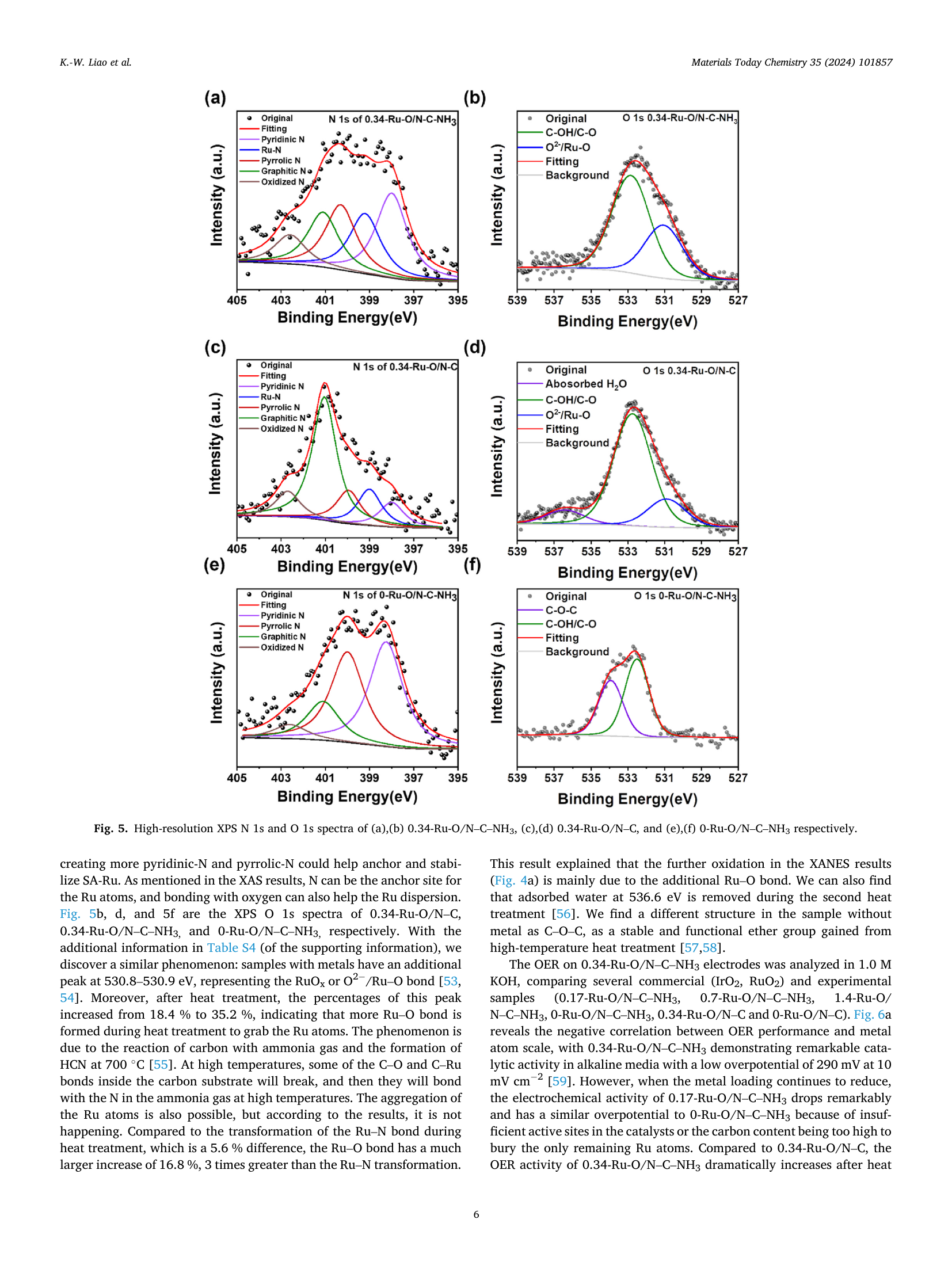
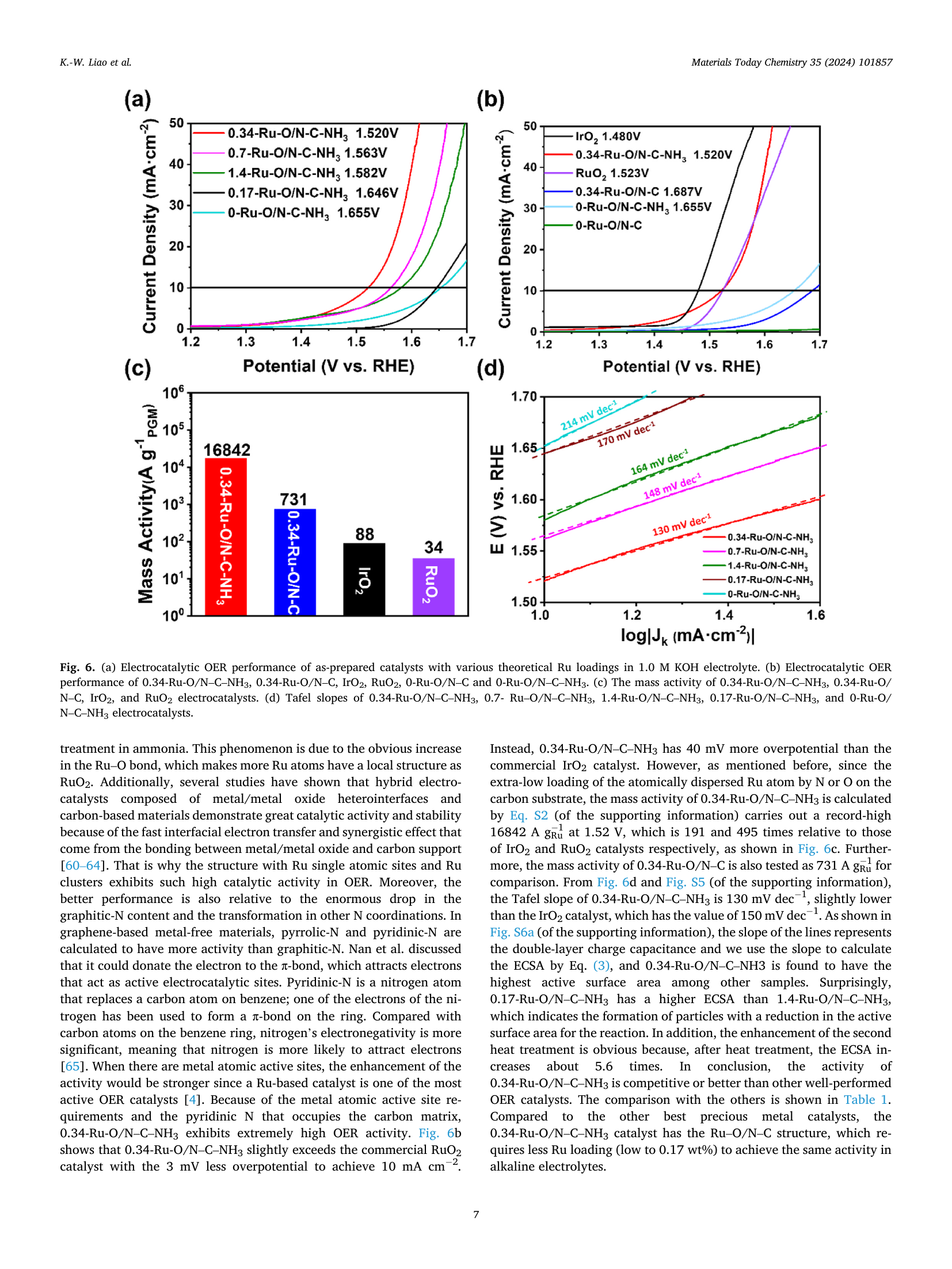
This study introduces a method for fabricating ultra-high-performance catalysts designed for the oxygen evolution reaction (OER), employing a combination of ball-milling, autoclave heat treatment procedures, and a two-step heat treatment approach. This method produces catalysts characterized by an atomic dispersion of ruthenium on nitrogen-doped carbon sheets (Ru–O/N–C–NH3). The Ru–O/N–C–NH3 catalyst exhibits exceptional OER activity in alkaline conditions, achieving a mass activity of 16842 A g−Ru1 at 1.52 V, and a minimal overpotential of 290 mV at a current density of 10 mA cm−2. Moreover, this catalyst demonstrates enduring stability, showing no significant decay after a 100-h stability test in anion exchange membrane water electrolysis (AEMWE), with a mass activity approximating 62000 A g−PGM1. This is nearly three orders of magnitude greater than the AEMWE that utilizes commercial IrO2 as an anode. The atomic dispersion and the Ru–O/N bonding of the catalyst are substantiated to contribute to the notable enhancement in OER activity.
📄 中文摘要
本研究開發了一種超高性能觸媒的製備方法,專為析氧反應(OER)設計,結合了球磨法、壓力熱處理及兩步驟熱處理程序。此方法製備出原子級分散的銥觸媒負載於氮摻雜碳片上(Ru–O/N–C–NH3)。Ru–O/N–C–NH3 觸媒在鹼性條件下展現優異的 OER 活性,在 1.52 V 時達到 16842 A g−Ru1 的質量活性,並在 10 mA cm−2 的電流密度下僅需 290 mV 的過電位。此外,該觸媒在陰離子交換膜水電解(AEMWE)中進行 100 小時穩定性測試後無明顯衰減,質量活性約為 62000 A g−PGM1,比使用商業 IrO2 作為陽極的 AEMWE 高出近三個數量級。原子級分散與 Ru–O/N 鍵結被證實為 OER 活性显著提升的關鍵因素。
🔬 五項核心重要發現
📊 關鍵圖表