Nitrogen-doped carbonaceous electrode modified by biological metal-organic framework for vanadium redox flow batteries
以生物金屬有機框架改質氮摻雜碳質電極應用於釩氧化還原流電池之研究
📄 英文摘要
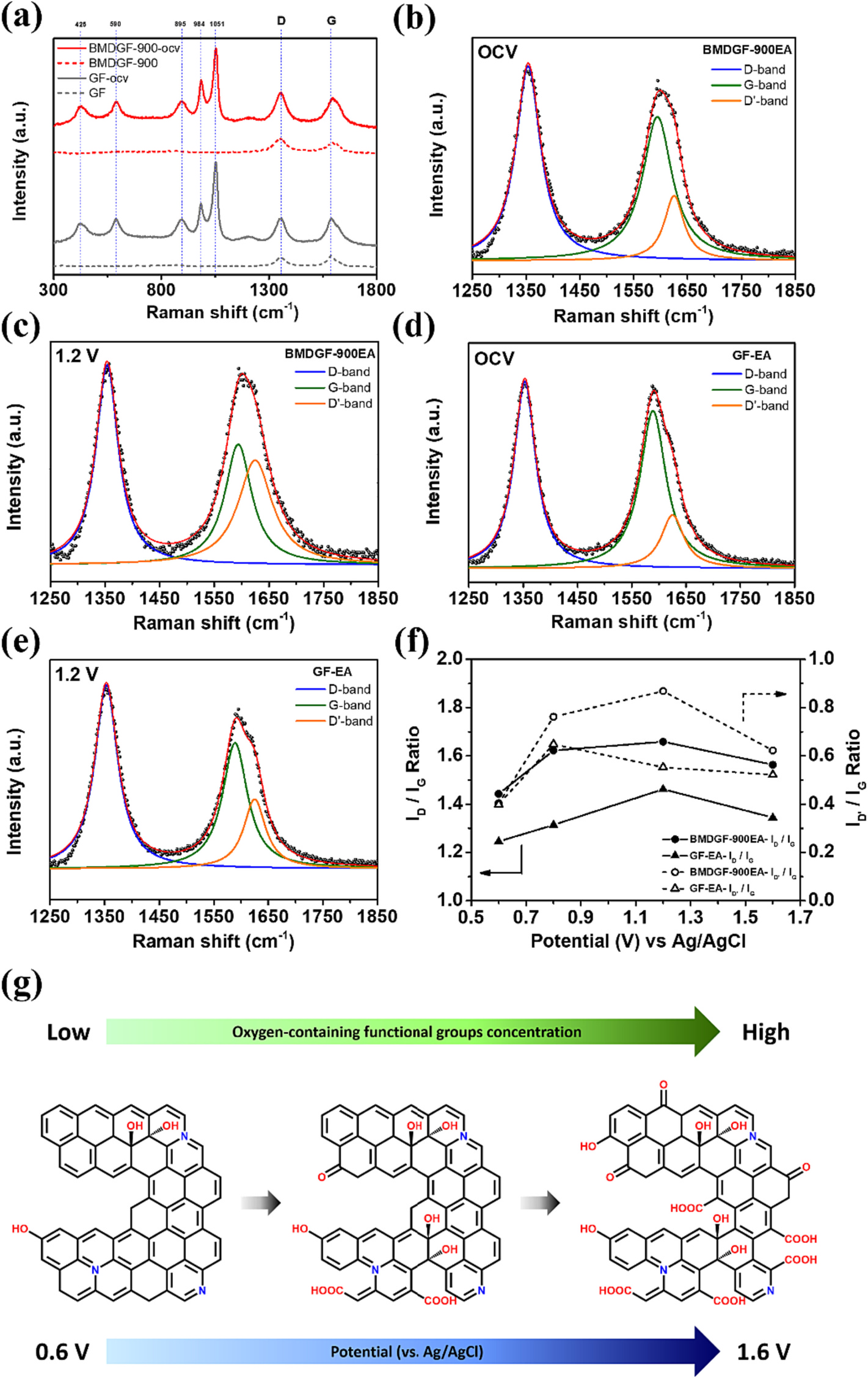
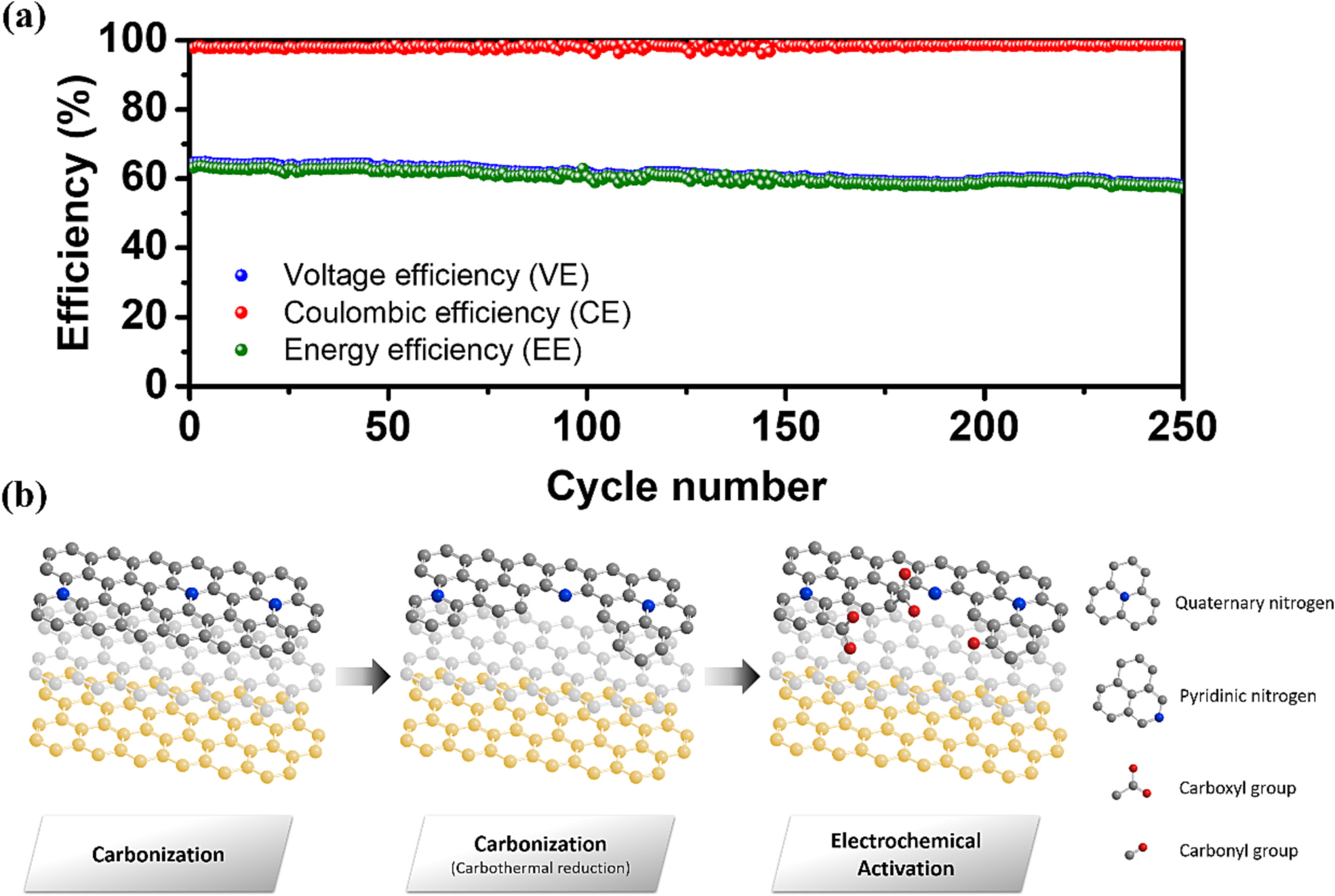
The biological metal-organic framework (Bio-MOF) is utilized to modify the carbonaceous electrode for the vanadium redox flow batteries. The microwave solvothermal method prepared the cobalt-based Bio-MOF on a graphite felt (GF) surface. Then, the nitrogen-doping graphite and porous structure formation were completed simultaneously during the carbonization process. Finally, electrochemical activation was conducted to remove cobalt metal from the GF electrode and raise the concentration of oxygen-containing functional group active sites. By in-situ Raman spectroscopy, the increase of disordered graphitic lattices could be observed by raising the potential from 0.6 V to 1.6 V. The microwave solvothermal method and electrochemical activation can effectively shorten the treatment time compared with the traditional solvothermal method and acidic etching processes. Among the carbonization parameters for Bio-MOF-covered GFs, maintaining the temperature at 900 °C for 2 h under an argon atmosphere is the most suitable. The annealed sample after electrochemical activation (BMDGF-900EA) displays 73.7 % energy efficiency at 120 mA cm⁻² and possesses a 90 % retention rate of efficiency after 250 cycles at 180 mA cm⁻². The superior performance results from more catalytic active sites, hydrophilic surface features, and larger specific surface area prove that this modification method derived from Bio-MOF indeed provides a novel and potential way to improve the VRFB performance.
📄 中文摘要
本研究利用生物金屬有機框架(Bio-MOF)對碳質电极进行改質,應用於釩氧化還原流電池(VRFB)。首先以微波水熱法在石墨氈(GF)表面製備鈷基 Bio-MOF,接著在高溫碳化過程中同步完成氮摻雜石墨化與多孔結構的建構。最後,進行電化學活化處理以去除 GF 表面的鈷金屬,並提高含氧官能團活性位點的濃度。透過原位拉曼光譜分析,可觀察到電位從 0.6 V 升至 1.6 V 時,無序石墨晶格的訊號隨之增加。微波水熱法與電化學活化技術相較於傳統水熱法及酸蝕製程,能大幅縮短處理時間。在所有碳化參數中,以 900 °C、2 小時、氬氣氛圍為最適條件。經電化學活化後的 BMDGF-900EA 樣品在 120 mA cm⁻² 下展現 73.7% 的能源效率,並在 180 mA cm⁻² 下經 250 次循環後仍維持 90% 的效率保留率。其優異性能歸因於更多的催化活性位點、親水性表面特性及更大的比表面積,證實此 Bio-MOF 衍生之改質方法為提升 VRFB 效能之創新且具潛力之途徑。
🔬 五項核心重要發現
📊 關鍵圖表