Elucidating the synergistic behavior of plasma-surface interaction via air tornado-type atmospheric pressure plasma on graphite felt for vanadium redox flow batteries
使用空氣旋渦型大氣壓等離子體處理石墨氈以提升釩氧化還原流電池效能之研究
📄 英文摘要
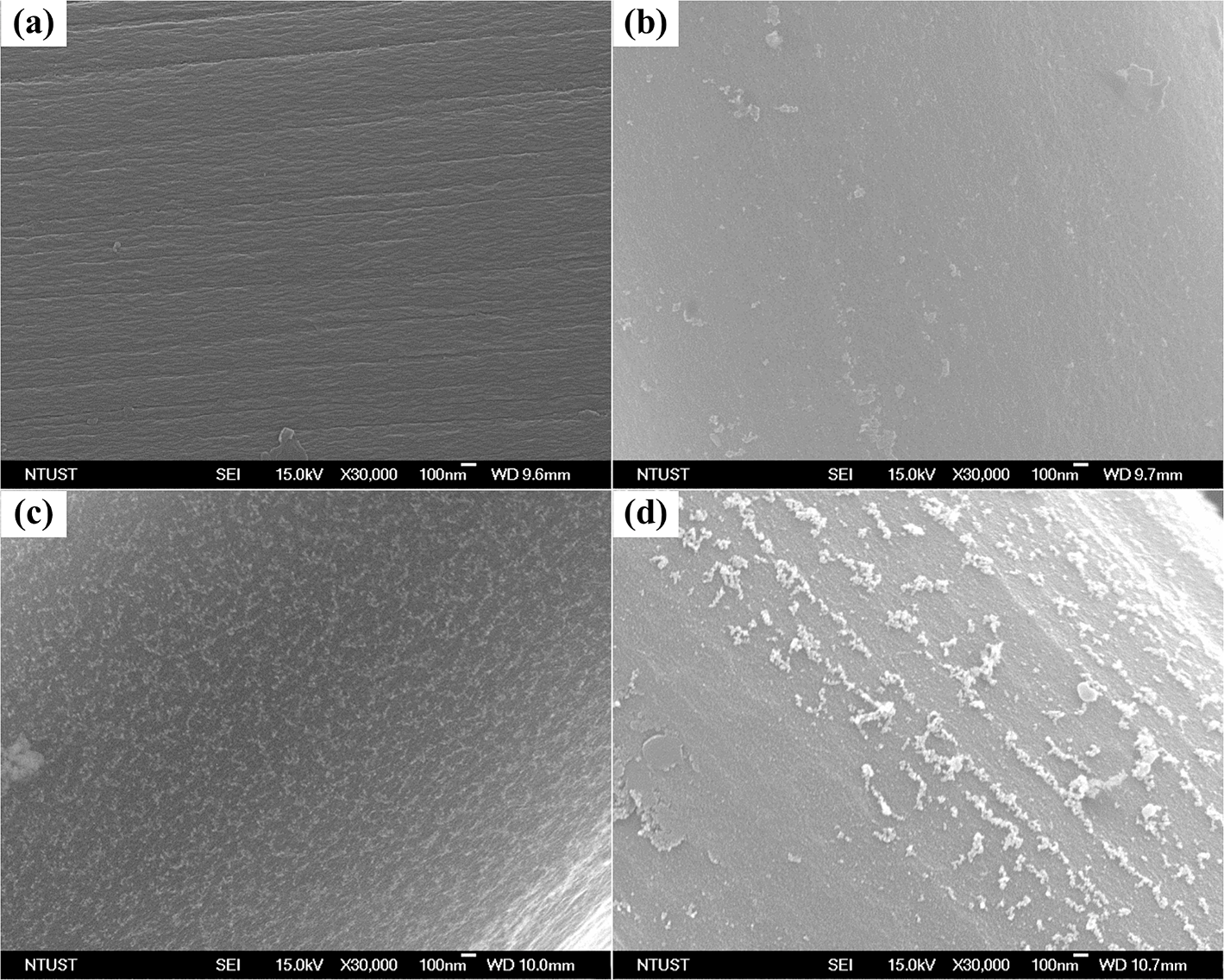
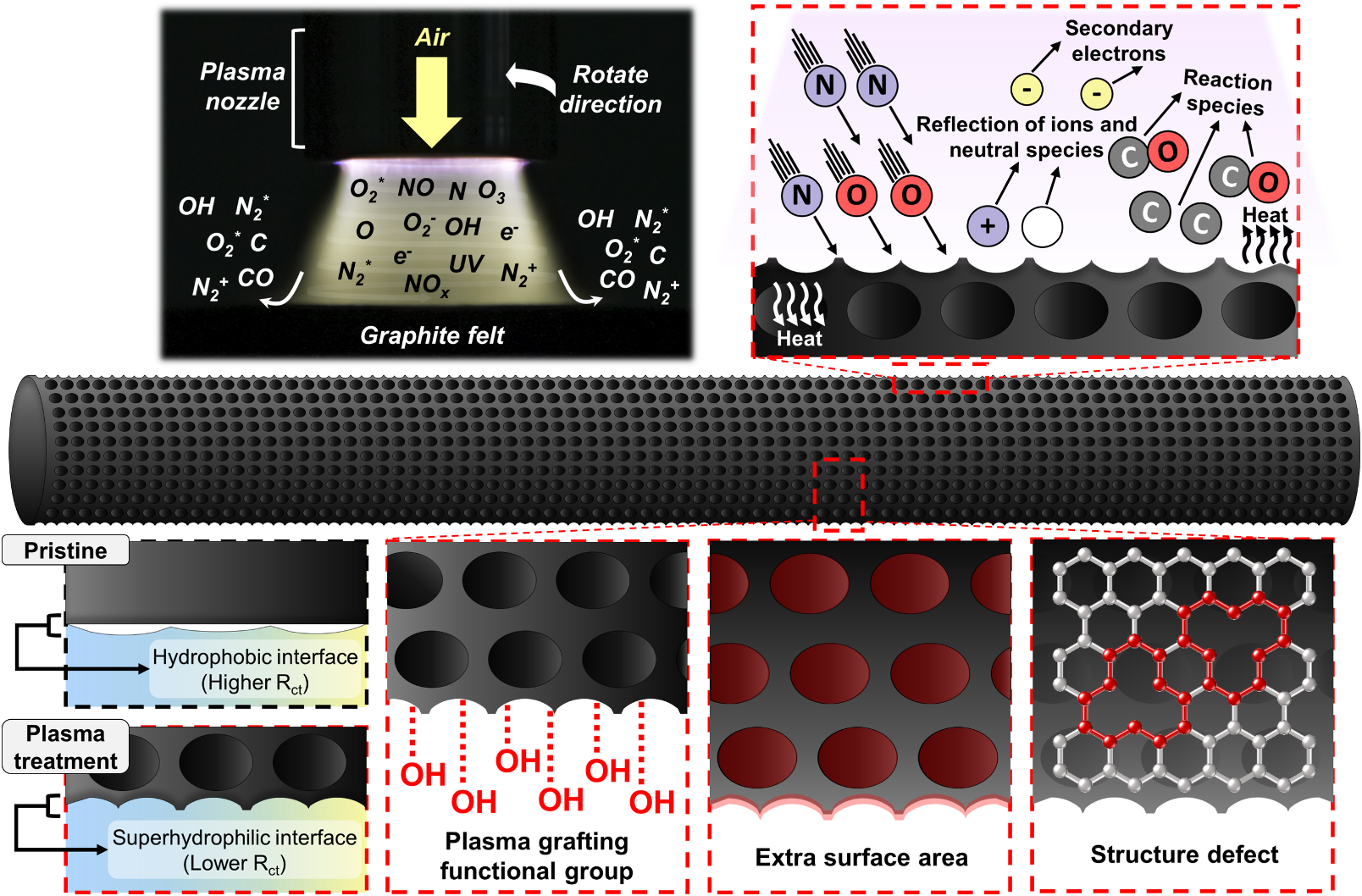
The electrochemical performance of graphite felt (GF) electrodes in vanadium redox flow batteries (VRFB) is often limited by poor wettability and low reaction activity. This study explores the feasibility of using compressed dry air in a tornado-type atmospheric pressure plasma jet (APPJ) for GF surface treatment. Wettability was assessed via water contact angle measurements, while plasma-surface interactions were analyzed using optical emission spectroscopy (OES) and gas detection. Structural and chemical modifications were characterized by Raman spectroscopy, scanning electron microscopy (SEM), and X-ray photoelectron spectroscopy (XPS), and electrochemical performance was evaluated through impedance measurements, cyclic voltammetry (CV), and single cell tests. At 550 W plasma power, GF's charge transfer resistance (Rct) is 3.94 Ω, while oxidation and reduction current densities reached 68.62 mA/cm² and −49.44 mA/cm², respectively. Single-cell test at 80 mA/cm² exhibited stable performance with no degradation, and the feasibility of scaling up this technology for commercial applications was demonstrated. These findings highlight the potential of air-based APPJ treatment as a scalable and effective method for enhancing GF electrode performance in VRFB.
📄 中文摘要
石墨氈(GF)電極在釩氧化還原流電池(VRFB)中的電化學效能常受限於其較差的潤濕性與低反應活性。本研究探討以壓縮乾燥空氣作為旋渦型大氣壓等離子體噴射(APPJ)的工作氣體,對石墨氈進行表面改質之可行性。潤濕性透過水接觸角測量評估,等離子體與表面間的交互作用則以發射光譜(OES)與氣體檢測進行分析。結構與化學改質以拉曼光譜、掃描電子顯微鏡(SEM)及 X 光光電子能譜(XPS)進行表徵,電化學效能則透過阻抗測量、循環伏安法(CV)及單電池測試進行評估。在 550 W 等離子功率下,石墨氈的電荷轉移電阻(Rct)降至 3.94 Ω,氧化與還原電流密度分別達到 68.62 mA/cm² 及 −49.44 mA/cm²。在 80 mA/cm² 電流密度下進行的單電池測試展現穩定效能且無衰減,並驗證了此技術规模化商業應用之可行性。本研究揭示了空氣式 APPJ 處理作為一種可擴展且有效之方法,在提升 VRFB 石墨氈電化學效能方面的巨大潛力。
🔬 五項核心重要發現
📊 關鍵圖表