📄 Our Lab Paper
Highly durable and efficient hydrogen production from alkaline seawater using pulse-deposited NiMoP nanosphere electrocatalysts
📄 Abstract
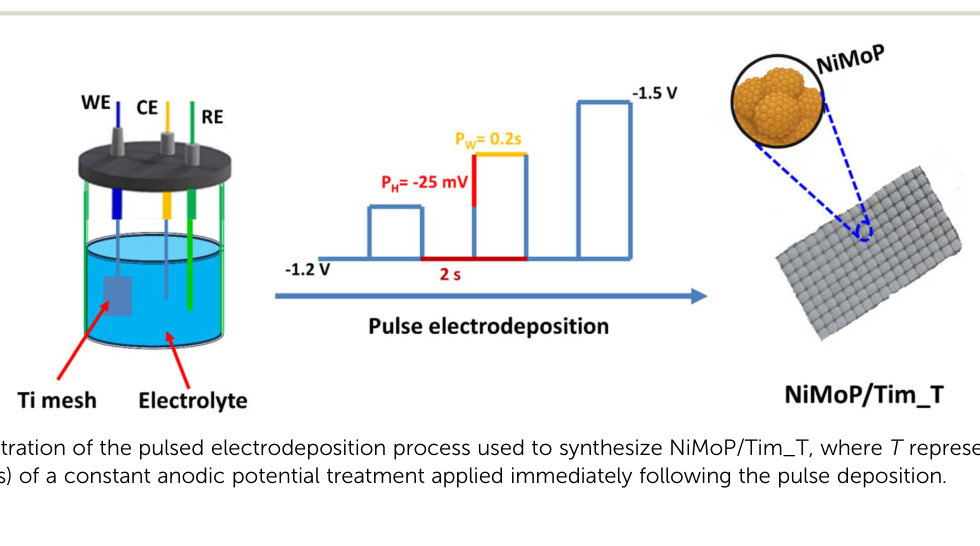
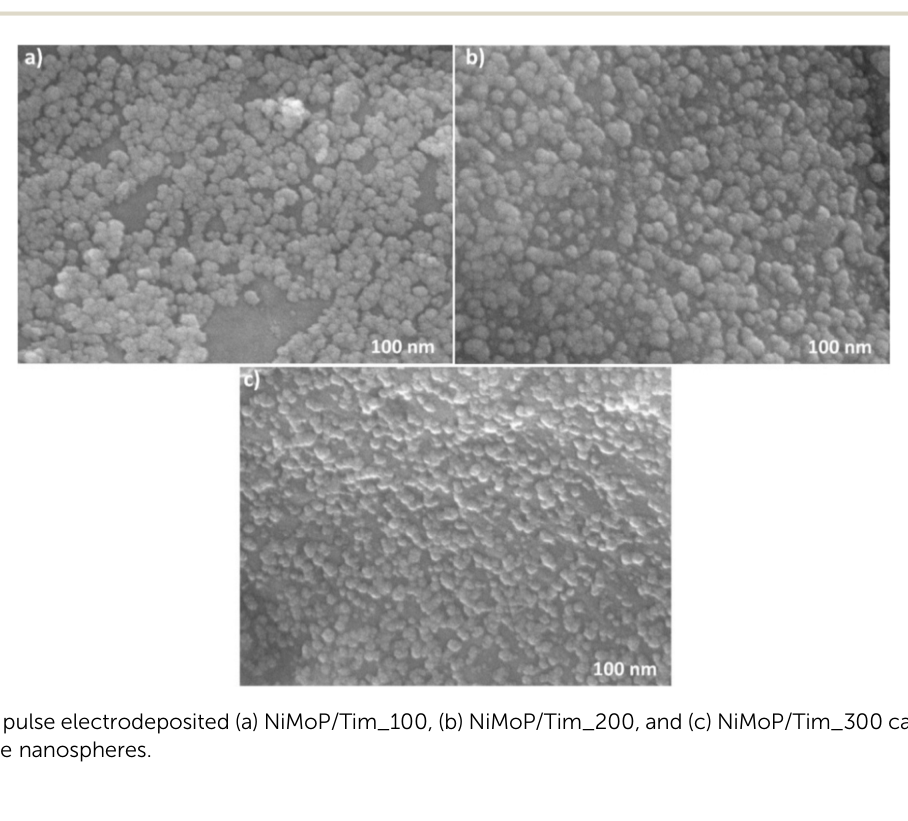
This study describes the synthesis of high-performance cauliflower-like NiMoP nanosphere electrocatalysts on a titanium mesh via a scalable pulse electrodeposition technique. The optimized cauliflower-like NiMoP demonstrates remarkable activity for the hydrogen evolution reaction in alkaline seawater, requiring only 50.3 mV overpotential to drive 10 mA cm⁻² and exhibiting exceptional durability, with only 0.5% current degradation over 24 hours. This superior performance is attributed to a unique combination of an amorphous structure, a high-surface-area morphology, and synergistic electronic effects among the Ni, Mo, and P components.
🔬 Five Key Findings
1
50.3 mV ultra-low overpotential at 10 mA cm⁻²: In alkaline seawater, among the best for non-noble metal HER catalysts.
2
24-hour durability: Only 0.5% current degradation after 24 hours of continuous operation — far superior to conventional metal catalysts.
3
Pulsed > constant-potential deposition: Pulsed method yields uniform cauliflower-like nanostructure vs. dense smooth films from DC method, providing higher surface area and active sites.
4
Amorphous structure + high surface area: No extra XRD peaks; cauliflower morphology provides abundant active sites and excellent electrolyte wettability.
5
Ni–Mo–P synergistic effect: P modifies electronic structure to promote HER; Mo and P jointly enhance Ni catalytic activity, achieving efficient HER performance.
📊 Key Figures