Defect-rich high-entropy spinel oxide catalyst for efficient vanadium redox flow battery
📄 Abstract
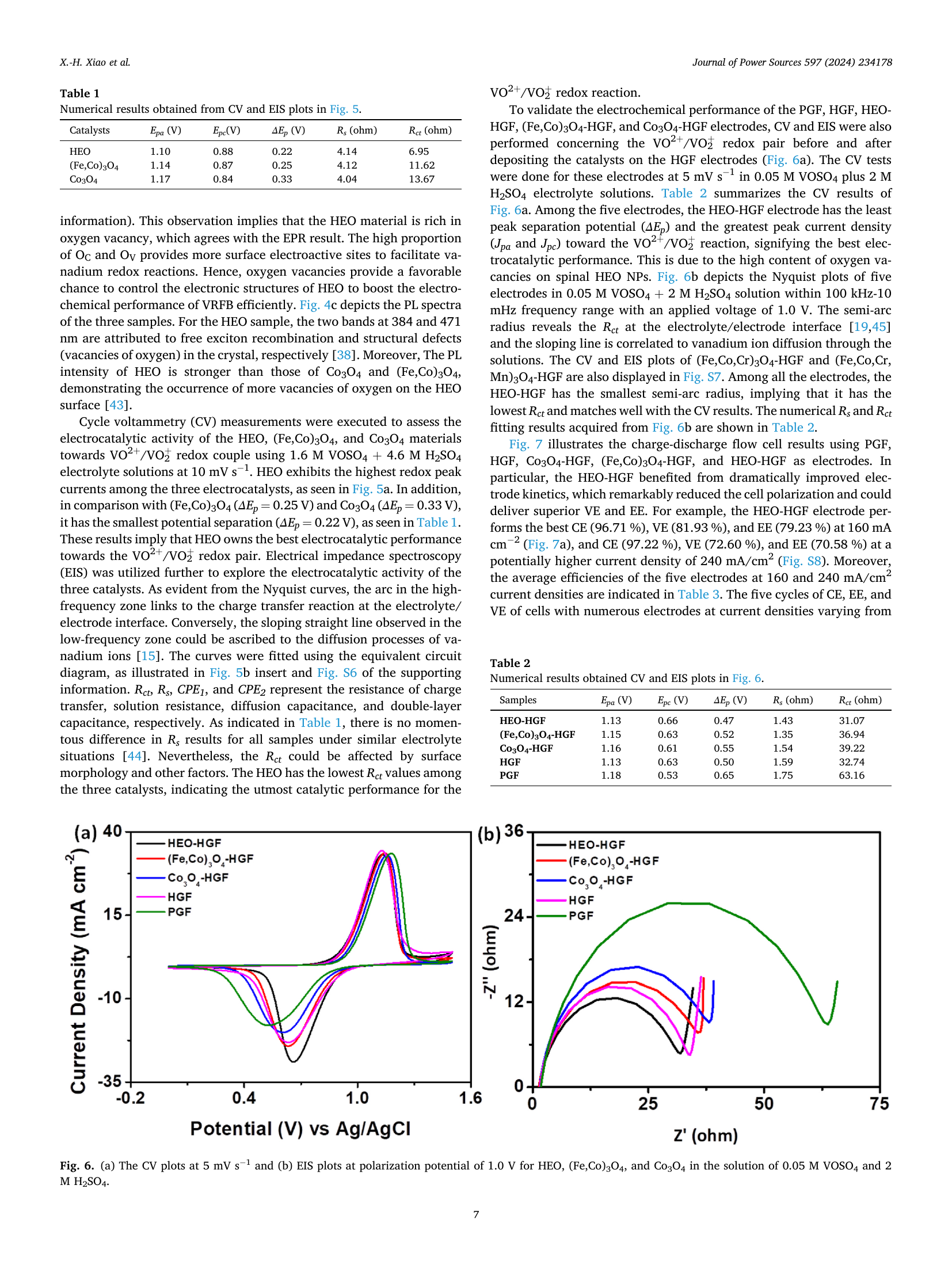
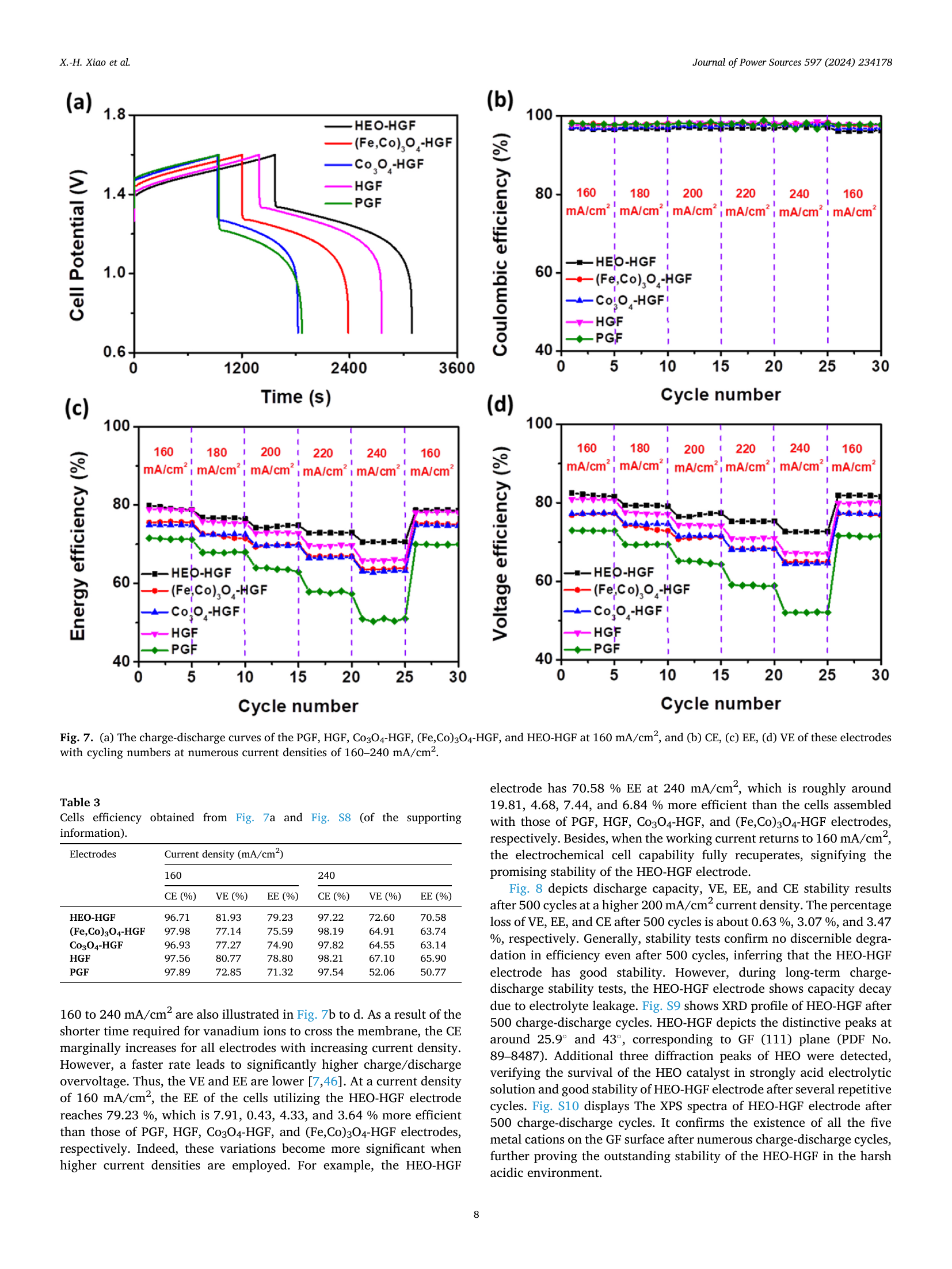
High entropy oxides (HEO) represent an innovative group of materials stabilized by incorporating configurational entropy. These materials are expected to display fascinating electrochemical properties. Herein, we successfully synthesized a defect-rich (CoCrFeMnNi)3O4 HEO catalyst with a single-phase spinel structure through a hydrothermal route pursued by calcination and, for the first time use it for vanadium redox flow battery (VRFB). Compared with monometallic oxide, Co3O4, and bimetallic oxide, (Fe,Co)3O4, the HEO catalyst reveals the utmost catalytic performance and reversibility towards the VO2+/VO2+ redox couple. Owing to the unique single-phase spinel structure and abundant oxygen vacancies, the VRFB flow cell using the HEO-modified heat-treated graphite felt (HEO-HGF) electrode achieves an outstanding energy efficiency of 79.23% and 70.58% at 160 and 240 mA/cm2, respectively, and shows good stability even for 500 cycles. This study provides new insight into other redox flow battery applications.
🔬 Key Findings
📊 Key Figures