Surface Electroactive Sites of Tungstated Zirconia Catalysts for Vanadium Redox Flow Batteries
📄 Abstract
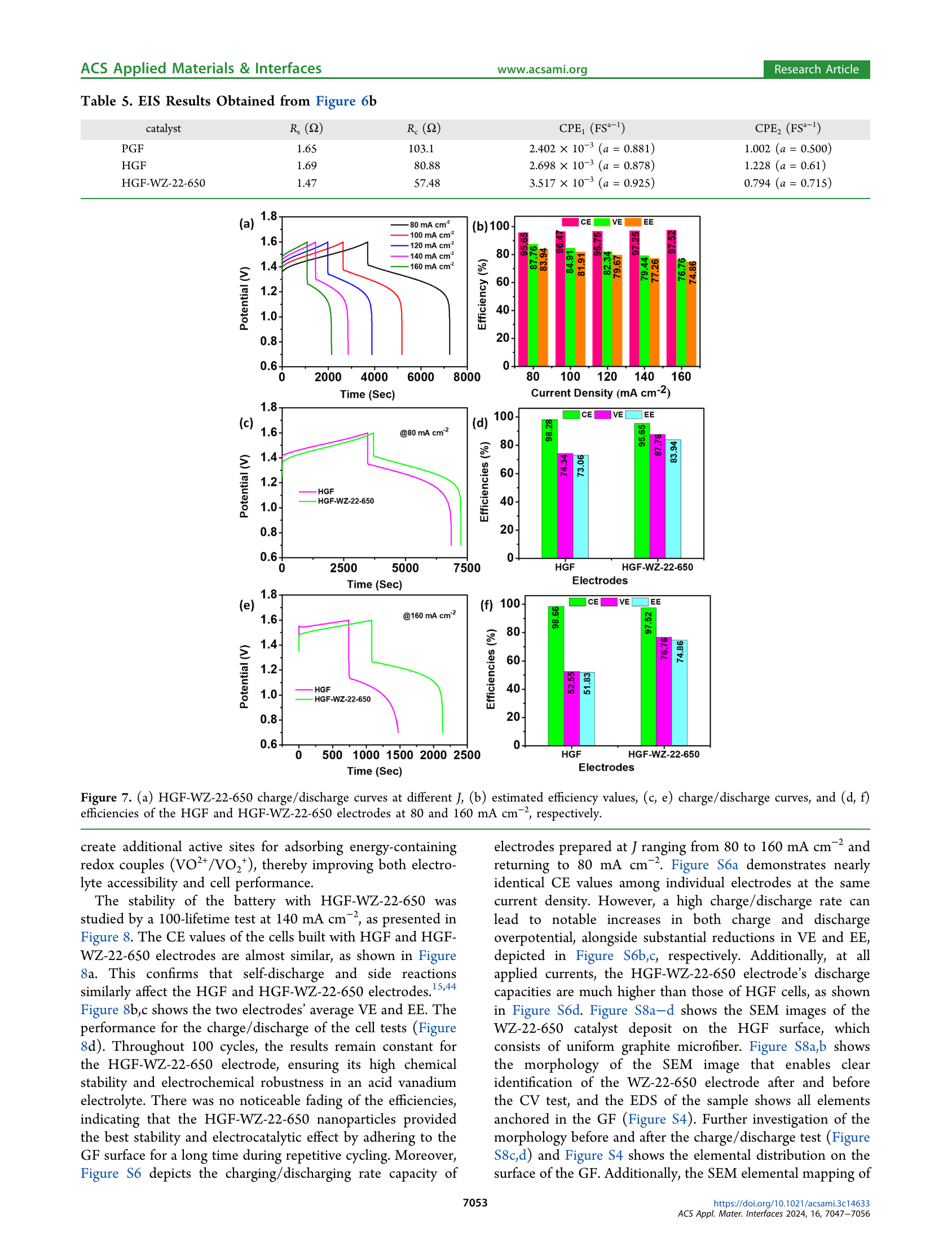
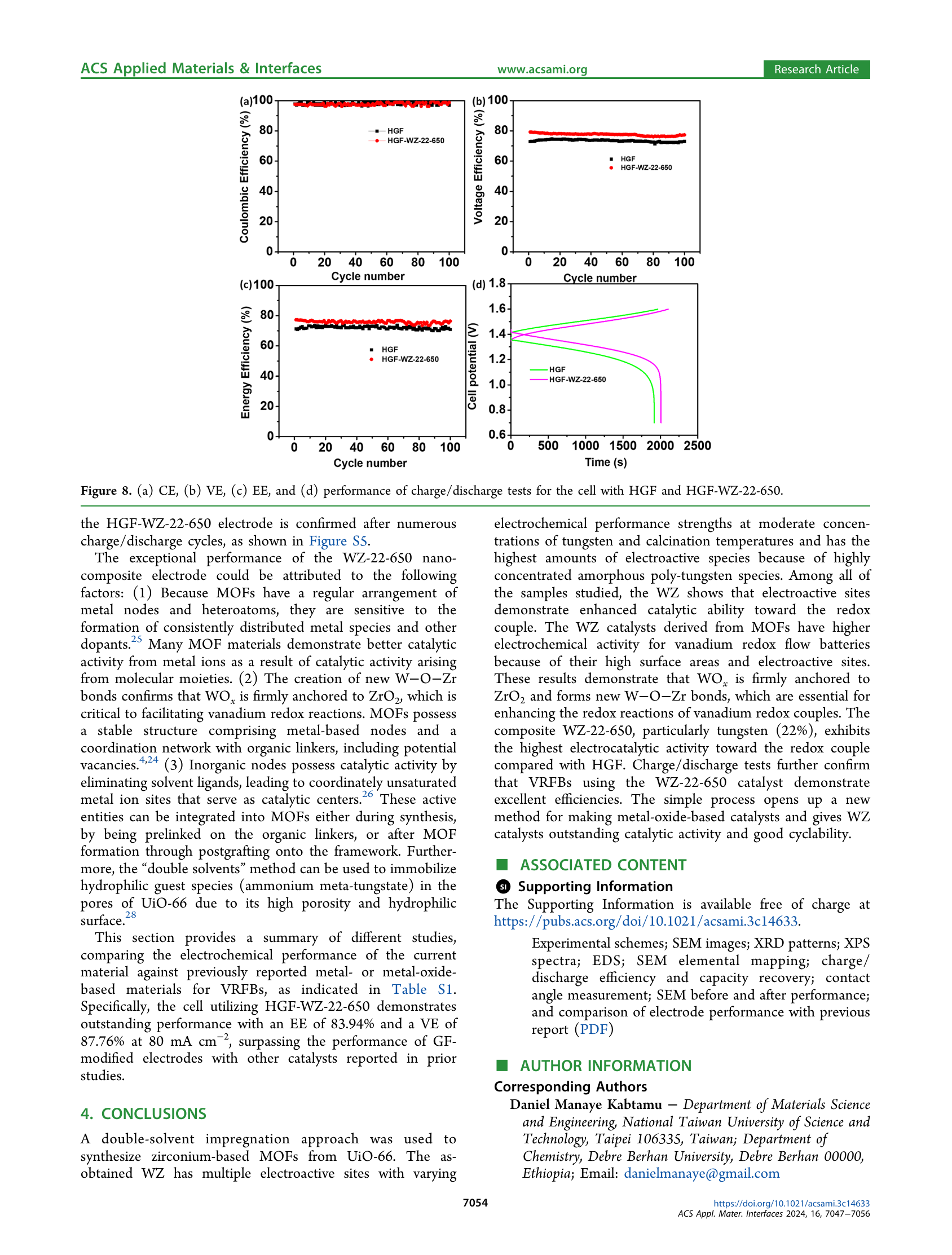
Surface electroactive sites for tungstate zirconia (WZ) were created by utilizing tungstate-immobilized UiO-66 as precursors via a double-solvent impregnation method under a mild calcination temperature. The WZ-22-650 catalyst, containing a moderate W content (22%), demonstrated a high density of surface electroactive sites. Proper heat treatment facilitated the binding of oligomeric tungsten clusters to stabilized tetragonal ZrO2, resulting in improved catalytic performance toward the VO2+/VO2+ redox couples compared to other tested samples. The substantial surface area, mesoporous structure, and establishment of new W-O-Zr bonds affirm the firm anchoring of WOx to ZrO2. This robust attachment enhances surface electroactive sites, elevating the electrochemical performance of vanadium redox flow batteries (VRFBs). Charge-discharge tests further demonstrate that the superior voltage efficiency (VE) and energy efficiency (EE) for VRFBs using the WZ-22-650 catalyst are 87.76 and 83.94% at 80 mA cm-2, which are 13.42% VE and 10.88% EE better than heat-treated graphite felt, respectively. Even at a higher current density of 160 mA cm-2, VRFBs utilizing the WZ-22-650 catalyst maintained considerable efficiency, recording VE and EE values of 76.76 and 74.86%, respectively. This facile synthesis method resulted in WZ catalysts displaying superior catalytic activity and excellent cyclability, offering a promising avenue for the development of metal-oxide-based catalysts.
🔬 Key Findings
📊 Key Figures