Elucidating the synergistic behavior of plasma-surface interaction via air tornado-type atmospheric pressure plasma on graphite felt for vanadium redox flow batteries
📄 Abstract
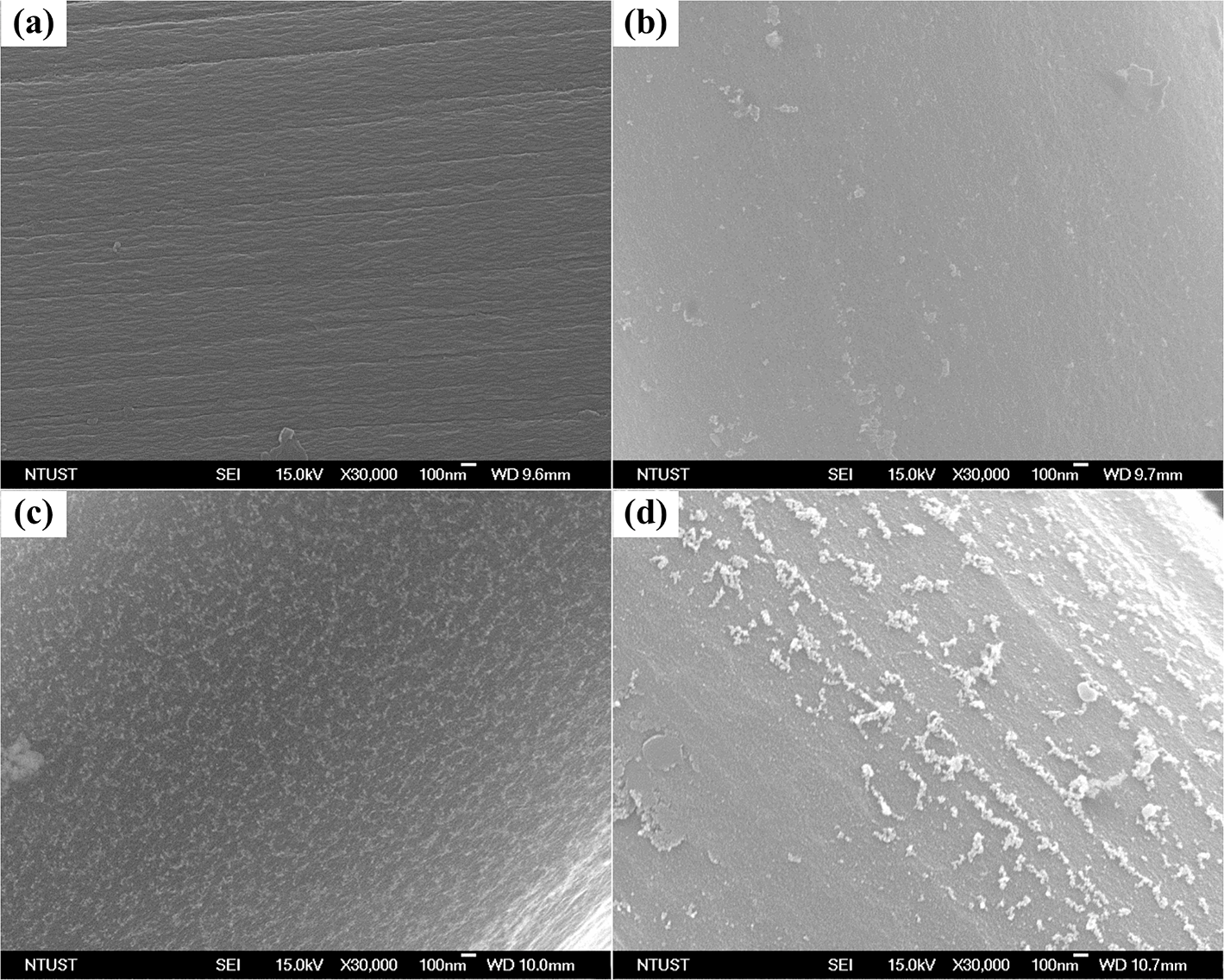
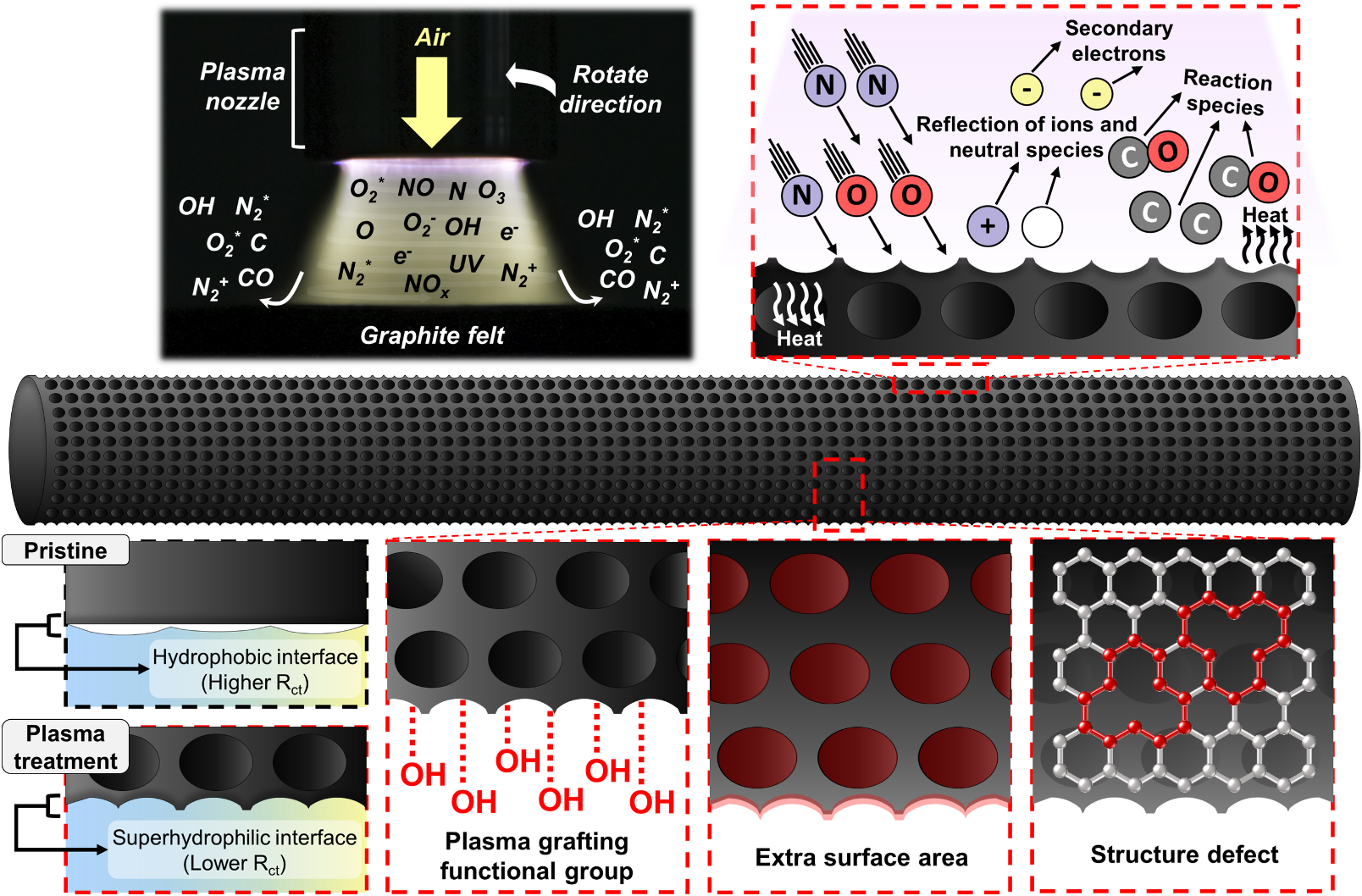
The electrochemical performance of graphite felt (GF) electrodes in vanadium redox flow batteries (VRFB) is often limited by poor wettability and low reaction activity. This study explores the feasibility of using compressed dry air in a tornado-type atmospheric pressure plasma jet (APPJ) for GF surface treatment. Wettability was assessed via water contact angle measurements, while plasma-surface interactions were analyzed using optical emission spectroscopy (OES) and gas detection. Structural and chemical modifications were characterized by Raman spectroscopy, scanning electron microscopy (SEM), and X-ray photoelectron spectroscopy (XPS), and electrochemical performance was evaluated through impedance measurements, cyclic voltammetry (CV), and single cell tests. At 550 W plasma power, GF's charge transfer resistance (Rct) is 3.94 Ω, while oxidation and reduction current densities reached 68.62 mA/cm² and −49.44 mA/cm², respectively. Single-cell test at 80 mA/cm² exhibited stable performance with no degradation, and the feasibility of scaling up this technology for commercial applications was demonstrated. These findings highlight the potential of air-based APPJ treatment as a scalable and effective method for enhancing GF electrode performance in VRFB.
🔬 Five Core Findings
📊 Key Figures