🤝 Collaborative Paper
Enhanced Fuel Cell Performance with Robust Pyridinium-Derivative-Functionalized SBS Triblock Copolymer Anion-Exchange Membranes
📄 Abstract
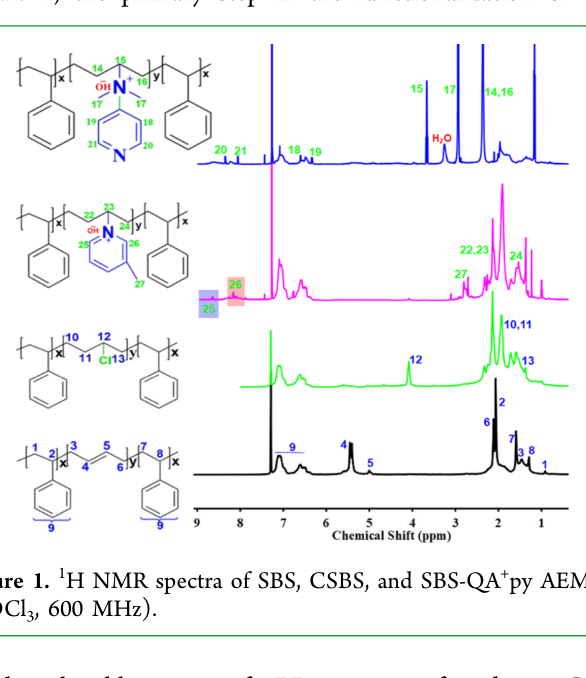
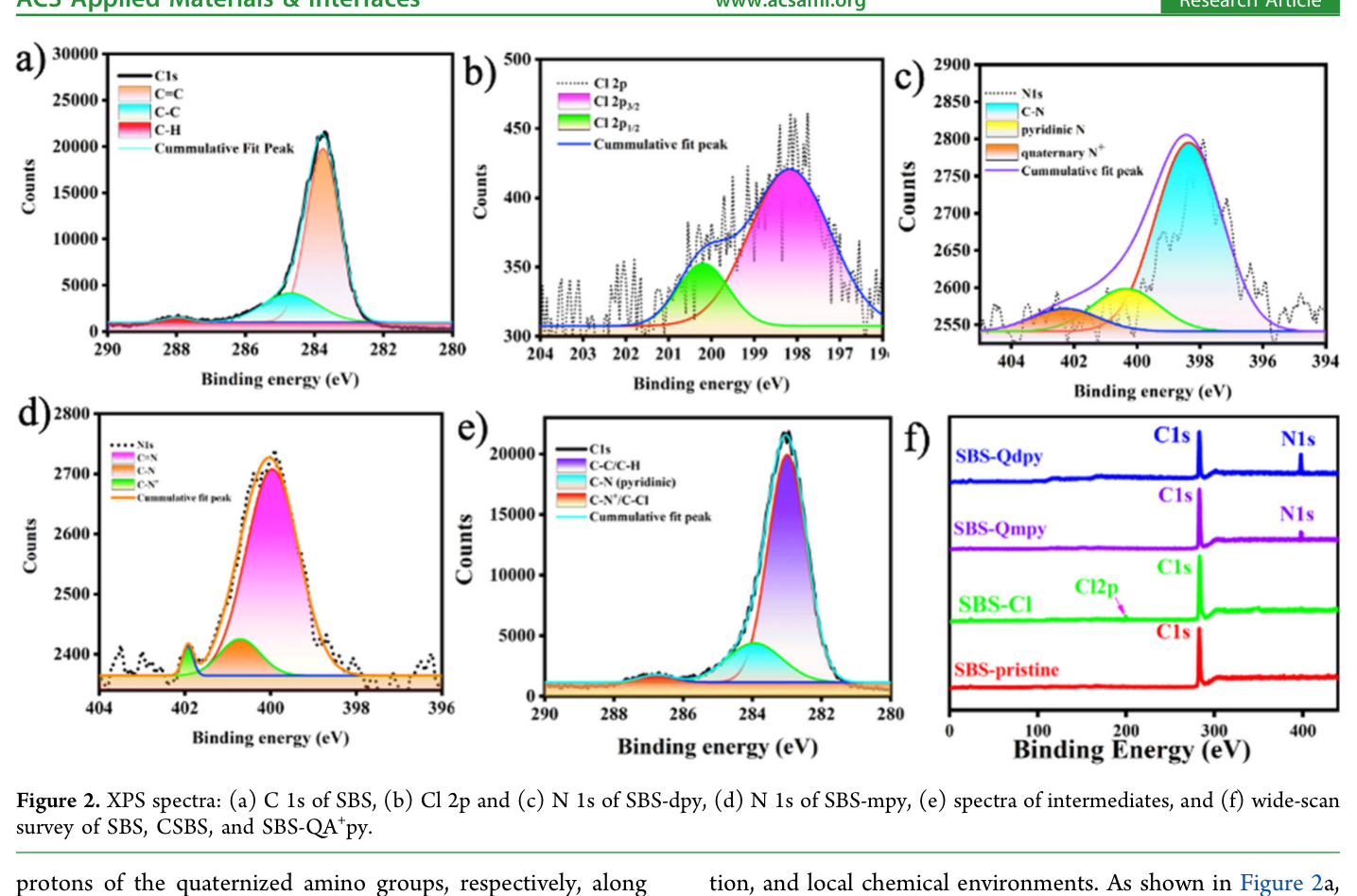
A series of polystyrene-block-polybutadiene-block-polystyrene (SBS) membranes functionalized with pyridinium derivatives (SBS-QA+py) were synthesized through free-radical chlorination. The resulting AEMs exhibited controlled IECs, water uptake, and optimized interionic separation. The SBS-Qdpy2 AEM achieved a peak ionic conductivity of 101.23 mS cm⁻¹ at 80 °C and a peak power density of 398.14 mW cm⁻² in a H₂/O₂ flow single cell at 80 °C, surpassing all previously reported SBS-based AEMs. The membranes also demonstrated excellent chemical durability in 1 M NaOH over 30 days.
🔬 Five Key Findings
1
398.14 mW cm⁻² peak power density at 80 °C H₂/O₂ single cell — highest among reported SBS-based AEMs.
2
101.23 mS cm⁻¹ ionic conductivity at 80 °C (IEC: 1.72 mequiv g⁻¹) with balanced dimensional stability.
3
30-day alkaline durability: stable in 1 M NaOH for 30 days with superior alkaline stability.
4
Non-covalent stacking: π-π interactions between polystyrene and pyridinic segments enhance mechanical integrity.
5
Precise IEC & nanochannel control: optimal balance between conductivity and mechanical strength.
📊 Key Figures